An appliance pickup service collects large home or business appliances, loads them safely, and takes them to the right next place. An appliance pickup service may include planning, carrying, transport, reuse, recycling, or disposal. The work depends on the appliance, access, and any utility lines. Smyrna GA Junk Removal can help plan the pickup.
Table of Contents
- What does an appliance pickup service include?
- How is appliance pickup scheduled and prepared?
- Does appliance pickup include disconnection and removal?
- How are refrigerators, washers, dryers, and stoves handled?
- Where do appliances go after pickup?
- How much does appliance pickup cost?
- What should you look for in an appliance pickup service?
- Frequently Asked Questions
What does an appliance pickup service include?
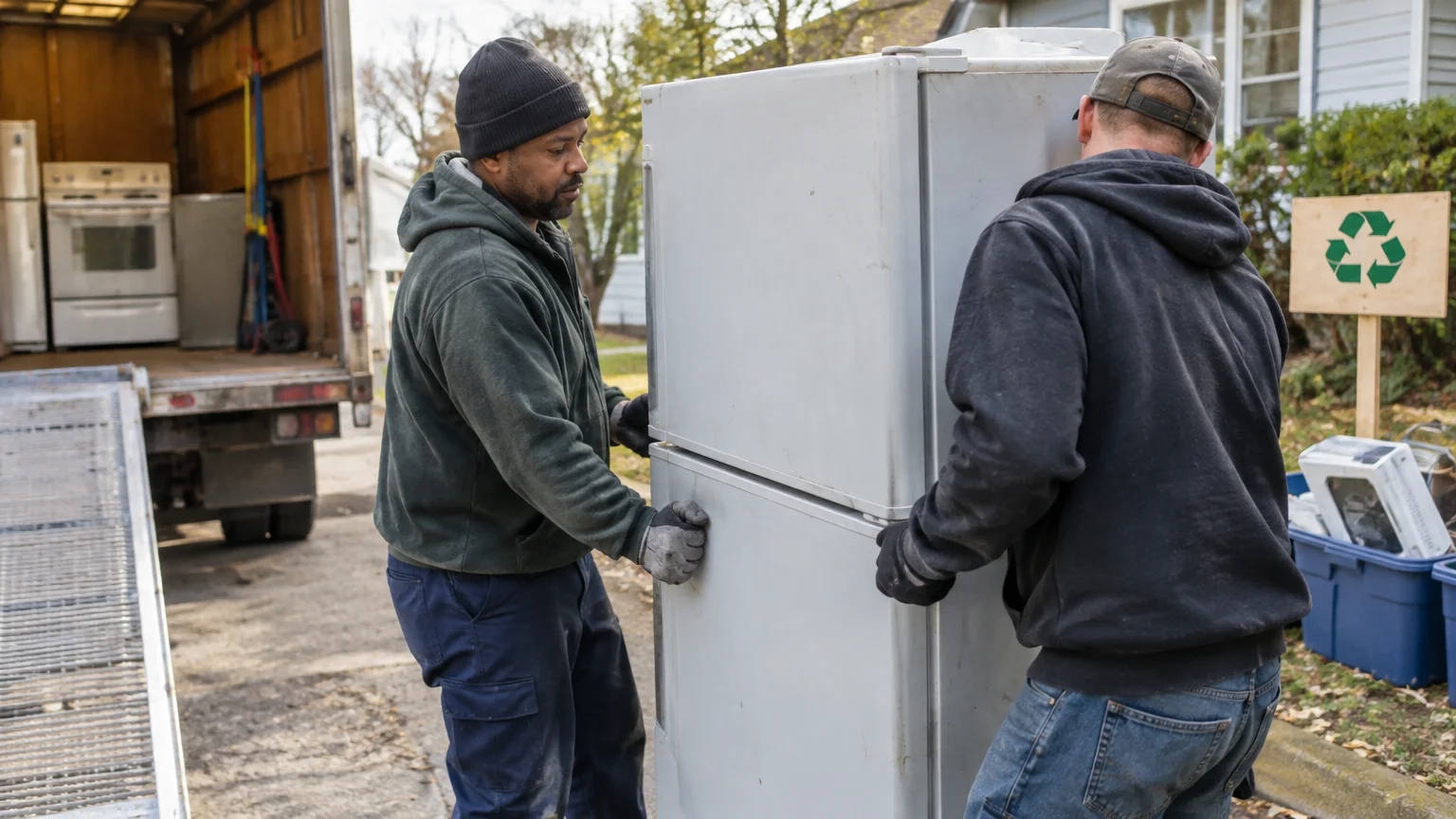
An appliance pickup service usually includes planning, carrying, loading, and transport. Many services collect appliances from homes, apartments, rental homes, offices, and other buildings. The crew may move each item through doors, halls, stairs, gates, or outdoor paths.
The service is more than placing an old machine beside the curb. A full-service junk removal company checks the item and protects nearby floors and walls. The crew then takes the appliance to a suitable reuse, recycling, or disposal site.
Appliances commonly accepted for pickup
Most appliance removal services accept large household machines such as:
- Refrigerators and freezers
- Washing machines and clothes dryers
- Electric or gas stoves and ovens
- Dishwashers and small appliances
- Water heaters, when local rules allow them
Acceptance rules can differ between providers. Some appliances contain refrigerant, fuel, oil, batteries, or other materials. These parts may need special care. A clear item list helps Smyrna GA Junk Removal confirm whether the planned pickup is suitable.
How residential and commercial pickups differ
Residential pickups often involve one or two appliances in a kitchen, laundry room, garage, or basement. Commercial work may include several units from an office, restaurant, rental property, store, or building project.
A business pickup may need a loading plan, building rules, elevator access, or a wider time window. Property owners should ask tenants or managers to clear the route first. In Smyrna, local access and disposal rules can also affect the plan.
How is appliance pickup scheduled and prepared?
Scheduling starts with a clear description of the appliance and its location. The provider needs to know what will be removed and how the crew will reach it. Good details help prevent delays on pickup day.
You do not need to measure every wall. Still, useful details include the item type, size, floor level, stairs, narrow doors, gates, and parking limits. Photos may help show tight turns, clutter, or hard-to-reach areas.
Information to provide when booking
The customer should share:
- The number and type of appliances
- Whether each item is inside, outside, or in another building
- Whether stairs, elevators, gates, or long walks are involved
- Whether the item connects to gas, water, power, or a drain
- Any damage, leaks, broken doors, or sharp edges
A property owner should mention tenant schedules and building rules. A business owner should explain loading areas, delivery rules, and site contacts. These details help a professional junk removal service plan the right crew and tools.
How to prepare the appliance and access route
Remove food, clothing, dishes, and loose items before pickup. Empty washers, dryers, dishwashers, and refrigerators. Secure doors and shelves when possible, but do not tape a damaged door in a way that creates danger.
Clear rugs, boxes, toys, and other trip hazards. Keep pets and children away from the work area. You can sweep the route and open gates, but you should not move a heavy appliance alone. Smyrna GA Junk Removal can explain what preparation is needed before the visit.
Does appliance pickup include disconnection and removal?
Appliance pickup often includes carrying and loading, but disconnection rules can vary. A crew may disconnect simple water or power connections when its service allows it. Gas lines, hardwired equipment, refrigerant systems, and unsafe connections may need a licensed professional.
Homeowners should never remove a gas line or cut electrical wires without proper training. A small mistake can cause a gas leak, electric shock, fire, water damage, or injury. When a connection is not clearly safe, stop and ask the right professional for help.
What removal crews may handle
A removal crew may move a disconnected appliance from its current spot. It may protect floors, use moving tools, guide the item through tight spaces, and load it for transport. The crew can often handle normal carrying work without the homeowner lifting the appliance.
Simple preparation is usually safe for a homeowner. This includes emptying the appliance, cleaning loose debris, removing personal items, and clearing the route. Technical work should stay with a qualified person.
When a licensed professional is needed
A licensed professional may be needed for gas appliances, hardwired equipment, refrigerant systems, or plumbing that is not a simple removable connection. Local rules may also require a trade license for some work.
The pickup provider can explain what must happen first. Once the appliance is safe and disconnected, the removal crew can often handle the physical collection. This keeps the job clear and lowers avoidable risk.
How are refrigerators, washers, dryers, and stoves handled?
Different appliances need different handling steps. Refrigerators and freezers may contain refrigerant. Washers can hold water, and dryers can contain lint. Stoves may be heavy, and gas models need extra care before movement.
A good appliance removal service checks the item before loading it. The crew looks for leaks, loose parts, broken glass, sharp edges, and unstable doors. This check helps decide whether the item can be reused, recycled, or sent to an approved disposal site.
Special considerations for refrigerators and freezers
Refrigerators and freezers should be emptied and cleaned before pickup. Remove food, ice, shelves, and loose bins. Keep doors closed during movement unless a safe preparation step says otherwise.
A refrigerator may need special handling because of refrigerant and other parts. Refrigerant is a fluid that helps an appliance stay cold. Customers should not puncture, cut, or drain the system. They should also avoid placing a refrigerator where children could climb inside. The pickup provider can explain the next step without asking the homeowner to do technical work.
Handling washers, dryers, stoves, and dishwashers
Washers should be drained as much as possible by following safe maker instructions. Dryers should be empty of clothing and lint. Stoves and ovens should be empty, cool, and disconnected by the right professional when needed.
Dishwashers may still hold water in their lines or base. A qualified person should handle plumbing or hardwired connections. Once the appliance is ready, the crew can move it carefully and keep loose parts together when possible.
Where do appliances go after pickup?
After pickup, appliances may go to a reuse center, donation partner, materials recovery facility, appliance recycler, or approved disposal site. A materials recovery facility sorts useful items for recycling. The next step depends on condition, age, safety, local rules, and the parts inside the appliance.
Reuse is often considered before disposal. A working appliance may help another household, rental property, or community program. Items that cannot be reused may still contain steel, aluminum, copper, glass, or plastic.
Recycling usable metals and components
Appliance recycling means separating useful materials and sending them to a facility that can process them. Large appliances often contain a mix of metals and other parts. Proper recycling keeps bulky items away from places that cannot handle them.
Not every appliance can be recycled in the same way. Refrigerant, oils, batteries, and electronic controls may need special steps. Customers should ask where the item is expected to go instead of assuming every part will be recycled.
Donation, reuse, and responsible disposal options
A working appliance may be offered for reuse if it is clean, safe, and suitable for another owner. A damaged or unsafe item may not qualify. Donation groups and recycling facilities often have their own rules.
Responsible disposal means using a site that can legally handle the appliance. Smyrna GA Junk Removal can help Smyrna homeowners, landlords, and businesses understand the next step for common appliances. Customers should also check lease, property, or building rules before leaving an appliance outside.
How much does appliance pickup cost?
The final cost of appliance pickup depends on the work involved, the item, and its location. One easy-to-reach appliance is usually a simpler job than several heavy items in a basement or commercial building. The final cost is confirmed on a quote after the provider understands the job.
Customers should compare jobs by effort, not by appliance name alone. A refrigerator may need special handling, while a washer may need draining. A large commercial pickup may need more planning than a small residential collection.
Factors that affect the cost
Common factors include:
- The number, size, and weight of the appliances
- Stairs, narrow halls, long carries, or limited parking
- Whether appliances are disconnected and ready to move
- Special handling for refrigerant, gas, oil, or electronic parts
- The labor needed to protect floors and nearby property
The customer should ask what the quote includes. Questions about carrying, loading, transport, recycling, and disposal can prevent confusion. A clear quote should match the details shared before the appointment.
How appliance pickup compares with other removal jobs
One or two ready-to-move appliances may be a more focused job than a full home cleanout. A damaged appliance in a tight space may need more work than several light items near an easy loading area. Urgent timing, difficult access, and special materials can also change the work involved.
Appliance pickup differs from curbside collection because the crew may enter the property and move heavy items. It also differs from demolition, where cabinets, walls, or fixtures may need removal first.
What should you look for in an appliance pickup service?
A reliable appliance pickup service should explain what it accepts, what customers must prepare, and how items are handled afterward. It should also be clear about safety limits. Helpful answers before booking can prevent problems on pickup day.
Look for a provider that serves the needed property type. A home, rental property, office, restaurant, and warehouse may each need a different plan. Local knowledge can also help with access, building rules, and disposal options in Smyrna.
Questions to ask before scheduling
Customers should ask:
- Which appliances does the service accept?
- Does the crew enter the home or building to remove items?
- Must gas, water, or hardwired connections be handled first?
- How should refrigerators, freezers, and washers be prepared?
- Where may usable, recyclable, or damaged appliances go?
- What access details should be shared before the visit?
The answers should be direct and easy to understand. A professional provider should not ask a customer to do unsafe work. It should also explain when another licensed professional is needed.
Key takeaways for planning a pickup
- Describe every appliance and its exact location.
- Clear the path before the crew arrives.
- Empty appliances and remove loose personal items.
- Never disconnect gas or hardwired equipment without proper training.
- Ask how reuse, recycling, and disposal will be handled.
For homes and businesses, good planning makes appliance removal safer and easier. Customers do not need to lift large machines alone. They can handle simple cleaning and route preparation, then leave heavy carrying and loading to trained removal workers.
Conclusion: An appliance pickup service can manage the removal of refrigerators, washers, dryers, stoves, and dishwashers from many property types. The customer should share clear access details, complete only safe preparation, and ask how each item will be handled after collection. Contact us today to arrange an appliance pickup that fits the property and appliance details.
Frequently Asked Questions
What happens to old appliances after pickup?
Old appliances may be reused, donated, recycled, or sent to an approved disposal site. The choice depends on the appliance’s condition and materials. Working items may serve another owner, while damaged units can still contain useful metal and parts. Customers should ask the provider about its normal handling process.
Can a pickup service remove a refrigerator from inside a home?
Many services can remove a refrigerator from inside a home when the route is safe and the appliance is ready. The crew may need clear doors, halls, stairs, and outdoor paths. Refrigerant systems should not be cut or opened by the homeowner. Ask about preparation before scheduling.
Can a homeowner disconnect an old washer or stove?
A homeowner can usually empty and clean an appliance. Disconnection is different. Gas, hardwired electrical, plumbing, or refrigerant work may require a licensed professional. The pickup crew can often remove the appliance after it is safely disconnected. When unsure, ask before touching the connection.
Does appliance pickup include garage, attic, and basement removal?
Some providers can combine appliance pickup with a broader cleanout, but access changes the work. Attics, basements, garages, stairs, and narrow doors should be mentioned during booking. Customers should list all items they want removed so the provider can confirm whether one visit is suitable.
How can a business prepare for commercial appliance pickup?
A business should list each appliance, its location, access limits, and building rules. Staff should clear aisles, keep customers away from the work area, and arrange any needed disconnection. A property manager may also need to approve loading times. Clear planning helps reduce disruption during the pickup.
If you are unsure what you are dealing with, someone can review the item before it becomes a larger job. Contact Smyrna GA Junk Removal to discuss the appliance, access route, and next steps.
If you are not sure what you are dealing with, it is worth having someone look at it before it turns into a bigger job. Get in touch with Smyrna GA Junk Removal today and we will tell you where you stand.