To prepare large appliances for removal, empty each unit, handle utilities with care, secure loose parts, and clear the moving path. Refrigerators, washers, dryers, stoves, ovens, and dishwashers each have different safety needs. This guide helps Smyrna property owners avoid damage, injury, leaks, and disposal problems.
Table of Contents
- Why should you prepare large appliances before removal?
- How do you safely disconnect a refrigerator?
- How should washers and dryers be prepared for pickup?
- How do you prepare stoves, ovens, and dishwashers?
- What should you do with appliance doors, cords, and loose parts?
- Where can large appliances be recycled or disposed of responsibly?
- How can you make large appliance removal easier on pickup day?
Why should you prepare large appliances before removal?
Preparation helps protect people, floors, walls, and door frames. It also helps the removal crew work without avoidable delays. A heavy appliance can tip, leak, scratch flooring, or damage a narrow doorway when it is not ready to move.
Good preparation also helps with the next step. Some appliances can be recycled for steel, copper, glass, plastic, and other materials. Others need special care because they have refrigerant, fuel lines, sealed parts, or electronic pieces.
How does preparation protect people, property, and the appliance?
A homeowner can safely handle many simple tasks. These include emptying food, removing shelves, wiping surfaces, gathering loose parts, and clearing clutter. The appliance should stay upright when the maker says it must. People should also avoid lifting heavy units alone.
Do not disconnect gas lines, hardwired electrical connections, or refrigerant systems without proper training. A licensed worker may be needed for those tasks. Check the appliance manual before moving it. Instructions can differ by model.
What should be checked before choosing a disposal or pickup option?
Start by checking the appliance type, size, condition, and location. Note whether it sits on a porch, in a basement, upstairs, or behind a narrow gate. Look for stairs, sharp turns, low ceilings, and soft ground outside.
Ask whether the selected service accepts that appliance. Also ask how it handles special parts. Local rules may affect refrigerators, freezers, window air conditioners, and other items with refrigerant. Smyrna GA Junk Removal can help property owners plan safe preparation for homes and businesses.
How do you safely disconnect a refrigerator?
A refrigerator should be empty, unplugged, and ready for a controlled move. Remove food, ice, shelves, drawers, and loose bins first. Do not move the unit until power, water, and any attached line are handled safely.
How should food, shelves, and unsecured parts be removed?
Remove all food and drinks. Put them in a cooler or another working refrigerator. Take out glass shelves, bins, racks, and loose trays. Wrap fragile parts so they do not slide or break during transport.
Wipe up spills and let the inside dry. A dry interior helps prevent leaks and bad smells. Tape or bundle removable parts together. Do not use strong tape on finished surfaces that may peel.
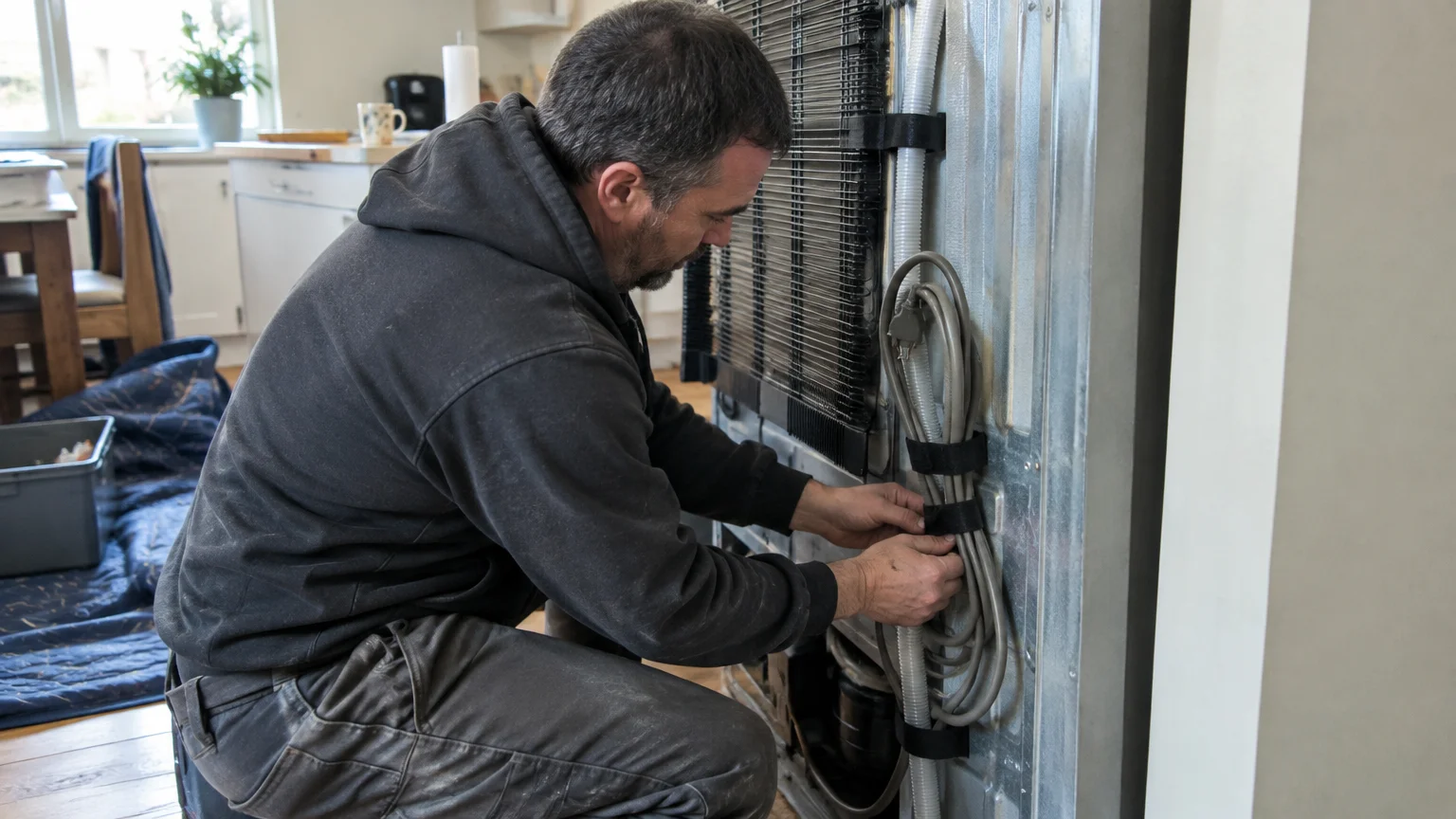
Unplug the refrigerator only when the plug and outlet are easy to reach. Never pull the cord across the room. Hold the plug firmly while removing it. Do not tug on the cord itself.
How should water lines, ice makers, and refrigerant concerns be handled?
A refrigerator with an ice maker or water dispenser may have a water line behind it. Shut off the water supply before disconnecting anything. A small container and towel can catch leftover water. Stop if the valve is stuck or the connection is hard to reach.
Refrigerant is a chemical that helps a cooling system move heat. It stays inside a sealed system. Do not release, pierce, or cut that system. Never puncture cooling coils or remove compressor parts. A trained worker or approved recycling site should handle refrigerant recovery.
Keep the refrigerator upright when possible. Secure the doors so they do not swing while moving. Do not create a child-trapping risk if the unit will sit unattended. Ask the removal provider how it wants the doors handled before pickup.
How should washers and dryers be prepared for pickup?
Washers should be drained and disconnected from water. Dryers need special care around gas and electrical connections. Homeowners can remove clothing, clean the drum, and gather hoses. Utility work may need a qualified worker.
How should a washing machine be drained and secured?
Run the final drain cycle if the washer still works. Turn off the hot and cold water valves. Unplug the washer when the outlet is safe to reach. Disconnect hoses only when the fittings turn easily and the setup is suitable for homeowner work.
Keep a shallow pan and towels nearby. Water may remain in the hose or pump. Put the hoses inside the washer or tie them together. Secure the drum if the manual recommends transit bolts or another restraint.
A washer is very heavy and can shift on stairs. Two adults may not be enough for a hard route. Trained movers are the safer choice when there are steps, tight turns, or long carries.
How should a dryer and its connection be checked?
Remove lint from the filter. Take loose items out of the drum. Unplug an electric dryer only when the cord and outlet look safe. Do not pull the cord or cut it to make removal easier.
Gas dryers need extra care. A homeowner should not disconnect a gas line without the right training. A trained worker should shut off the gas supply and check for leaks after approved work. If you smell gas, leave the area and contact the local gas utility or emergency service.
Keep the vent hose and power cord with the dryer unless the pickup provider says otherwise. Report a damaged vent, burned plug, or rusted connection before moving the unit. This helps the crew plan the job safely.
How do you prepare stoves, ovens, and dishwashers?
Stoves, ovens, and dishwashers should be empty and clean enough for safe handling. These appliances may have gas, electricity, water, sharp edges, and heavy doors. Simple cleaning is safe for most homeowners. Utility work may need a trained worker.
How should cooking appliances be cleaned and secured?
Remove pans, racks, burner grates, knobs, and loose trays. Wipe away grease and food scraps so nothing falls during movement. Let cleaned parts dry before placing them in a box or bag.
An oven door can swing open and add weight. Follow the manual when removing or securing it. Do not force a hinge. Do not wrap tape around hot or delicate surfaces.
A freestanding electric range may unplug from a nearby outlet. Some units are hardwired instead. A gas range may connect to a flexible gas line. Only a qualified person should disconnect a hardwired or gas appliance.
How should a dishwasher and its connections be handled?
Remove dishes, racks, filters, and standing water. Wipe the inside and the floor near the unit. Turn off water and power before approved disconnection work begins.
Dishwashers are often attached beneath a counter. They may connect to a drain hose and a hardwired electrical line. Do not pry the unit out or cut connections. A qualified installer or removal worker can find hidden attachments and help prevent cabinet damage.
If a unit leaks, smells like gas, sparks, or has exposed wiring, keep people away. Tell the removal provider about the problem before pickup. Clear details help the crew bring the right tools and plan a safer removal.
What should you do with appliance doors, cords, and loose parts?
Doors, cords, racks, hoses, and small parts should be secured before the appliance leaves the property. Loose items can fall, cause trips, or become separated from the main unit. Good organization also helps with recycling and reuse decisions.
How can doors be secured without creating a hazard?
Follow the maker’s instructions for each appliance. Doors may be taped shut for a short move. Strong tape can harm paint or leave sticky marks. Soft straps or wrap may work better when the surface allows them.
Do not leave an old refrigerator or freezer where a child or pet could climb inside. If a door is removed, store it away from walkways. The removal provider can explain the safest choice for that model.
How should cords, racks, hoses, and removable parts be organized?
Bundle the power cord without bending it sharply. Put clean hoses, racks, shelves, trays, and knobs in a labeled bag or box. Keep fragile glass parts away from heavy metal pieces.
Do not cut cords, drain unknown liquids, or remove sealed parts just to make the appliance smaller. These actions can cause injury or disposal problems. Take photos of unusual connections before a qualified worker disconnects them.
A short checklist can help:
- Empty the appliance completely.
- Remove loose shelves, racks, bins, and trays.
- Secure cords, hoses, and small parts.
- Mark damaged, leaking, or unsafe areas.
- Keep parts away from children, pets, and walkways.
Where can large appliances be recycled or disposed of responsibly?
Large appliances may go to a recycling center, transfer station, retailer take-back program, maker program, or professional removal service. The best choice depends on the appliance, local rules, and the site’s acceptance list. A local waste office can explain current requirements in Georgia.
How does appliance recycling and material recovery work?
Appliance recycling starts with safe sorting and preparation. Workers may remove reusable parts and recover refrigerant from cooling equipment. They can also separate metals, plastic, glass, wiring, and insulation. These materials may then enter a recovery process instead of going straight to disposal.
Do not assume every site accepts every appliance. One location may accept washers and dryers but require special steps for refrigerators. Another may limit drop-off hours, loading methods, or the number of items accepted.
A professional removal service can help when an appliance is too heavy for a personal vehicle. It can also help when the unit is hard to reach. Smyrna GA Junk Removal serves the main Smyrna area, including Downtown Smyrna, Vinings, Marietta, Mableton, Powder Springs, Sandy Springs, and nearby communities. The team can discuss a safe plan without asking the owner to handle heavy lifting alone.
Why do local disposal rules matter for refrigerants and other parts?
Refrigerators and freezers may hold refrigerant inside a sealed cooling system. Older appliances may also contain oils, switches, foam, batteries, or electronic controls. Local sites may have different rules for these parts.
Before choosing a drop-off site, ask if it accepts the exact appliance type. Confirm whether the unit must be empty, upright, or handled by an approved provider. Do not leave an appliance beside a dumpster or on a public sidewalk unless local rules clearly allow it.
How can you make large appliance removal easier on pickup day?
Pickup day is easier when the route is clear and the appliance is ready. The owner should plan the path from the appliance to the exit. Include doors, halls, stairs, gates, driveways, and the loading area.
How should a safe path be cleared?
Remove rugs, boxes, toys, plants, and small furniture from the route. Protect delicate flooring when needed. Keep pets and children in another room. Open gates and unlock doors before the crew arrives when permission allows.
Measure tight doorways and turns when the appliance is unusually wide. Check for low branches, loose steps, uneven ground, and wet surfaces outside. Tell the provider about stairs, basements, elevators, or long walks to the vehicle.
Do not move the appliance into a hallway before the route is ready. It may block an exit or make the last move harder. A clear plan helps protect walls and lowers the chance of a tip or slip.
When should professional removal help be arranged?
Professional help is wise when an appliance is heavy, built in, upstairs, connected to gas, hardwired, leaking, or hard to reach. It also helps when the owner lacks a suitable vehicle or cannot safely lift the unit.
A homeowner can usually handle emptying, cleaning, sorting, and simple unplugging when the setup is safe. Stop and ask for help when a connection is hidden, stuck, damaged, or linked to gas, water, or refrigerant.
Key takeaways:
- Empty and clean each appliance before moving it.
- Disconnect utilities only when it is safe and allowed.
- Keep refrigerant systems sealed and undamaged.
- Secure doors, cords, hoses, and loose parts.
- Clear the route and report hazards before pickup.
Frequently Asked Questions
Can a homeowner prepare an old appliance without professional help?
Yes, a homeowner can usually empty, clean, sort loose parts, and clear the route. Simple unplugging may also be safe when the outlet is easy to reach. Gas lines, hardwired connections, refrigerant systems, stuck fittings, and heavy carries should be handled by a qualified person.
What happens to old appliances after removal?
Many large appliances are sorted for recycling, reuse, or disposal. Workers may recover metals, plastics, glass, and usable parts. Refrigerators and freezers need special care because their sealed cooling systems may contain refrigerant. The final process depends on local rules and appliance condition.
Can an appliance be left beside a dumpster?
Usually, an appliance should not be left beside a dumpster without checking local rules first. Some properties and waste programs prohibit bulky items there. Refrigerators, freezers, and other appliances may need special handling. A scheduled pickup or approved drop-off is often safer.
Should refrigerator doors be removed before pickup?
Not always. The best choice depends on the model, route, and removal plan. Doors should never create a child or pet hazard while the unit waits. Follow the manual and ask the removal provider before removing hinges, seals, or heavy doors.
Where can someone recycle a washer or dryer?
Possible options include a local recycling center, transfer station, retailer program, maker program, or appliance removal service. Acceptance rules vary. Identify the exact appliance, ask whether it is accepted, and confirm preparation needs before arranging transport.
Conclusion
Large appliance removal starts with careful preparation. Emptying the unit, protecting loose parts, checking connections, and clearing the route can prevent common problems. When an appliance is heavy, built in, damaged, or connected to gas or refrigerant, professional help is safer.
Smyrna GA Junk Removal helps homeowners, business owners, and property managers plan appliance removal and nearby areas. Contact us to arrange a safe pickup and responsible disposal plan.